A product I own and run
Unbuzz: thoughtful caffeine tracking
An iOS and Android app for logging drinks and estimating caffeine remaining through the day. I designed and built the tracker, its adjustable calculations, and the Apple Watch companion.
Inside Unbuzz
See the product in use.
Explore drink logging, adjustable caffeine estimates, and habit tracking. Swipe or use the arrows to see more.
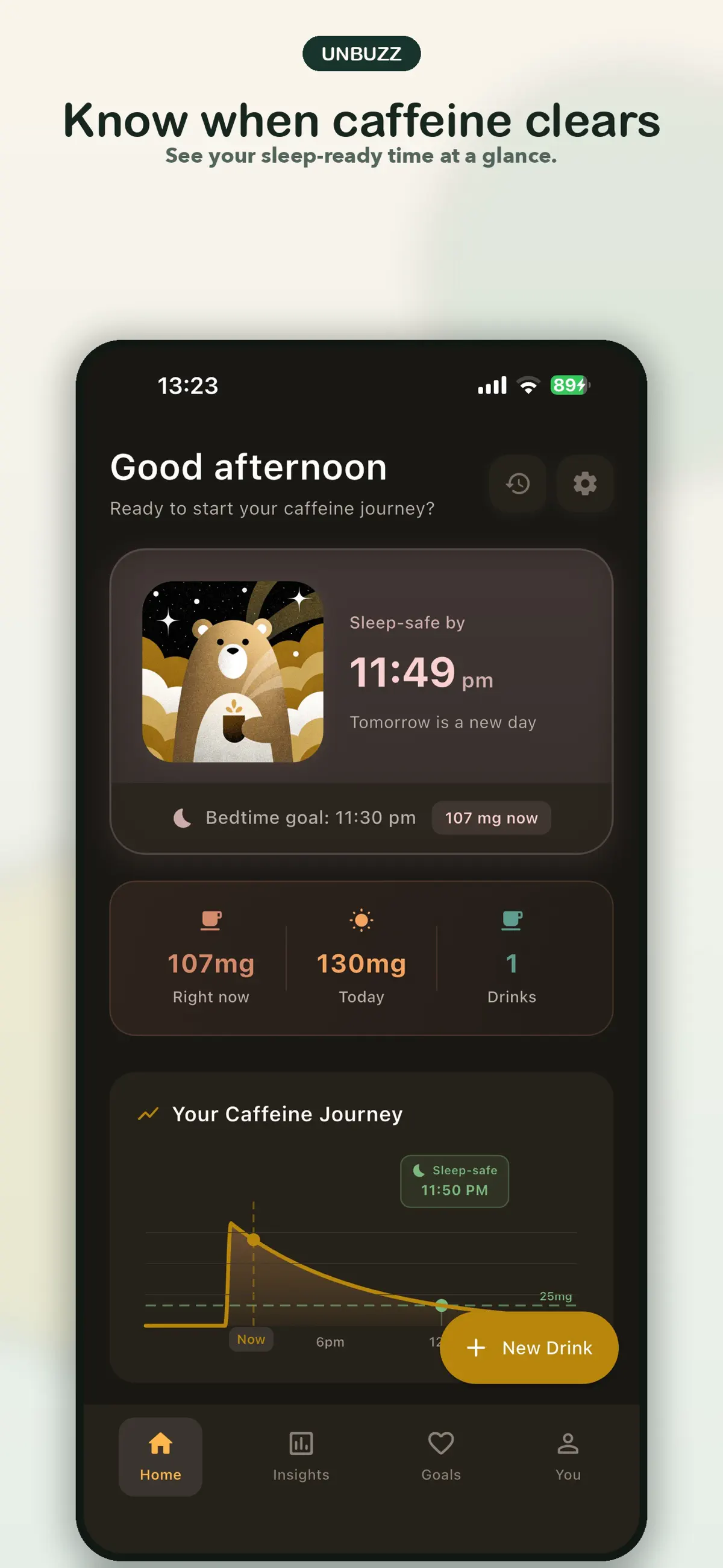
Today’s caffeine estimate
Logged drinks, a caffeine curve, and an estimated time based on the app’s settings.
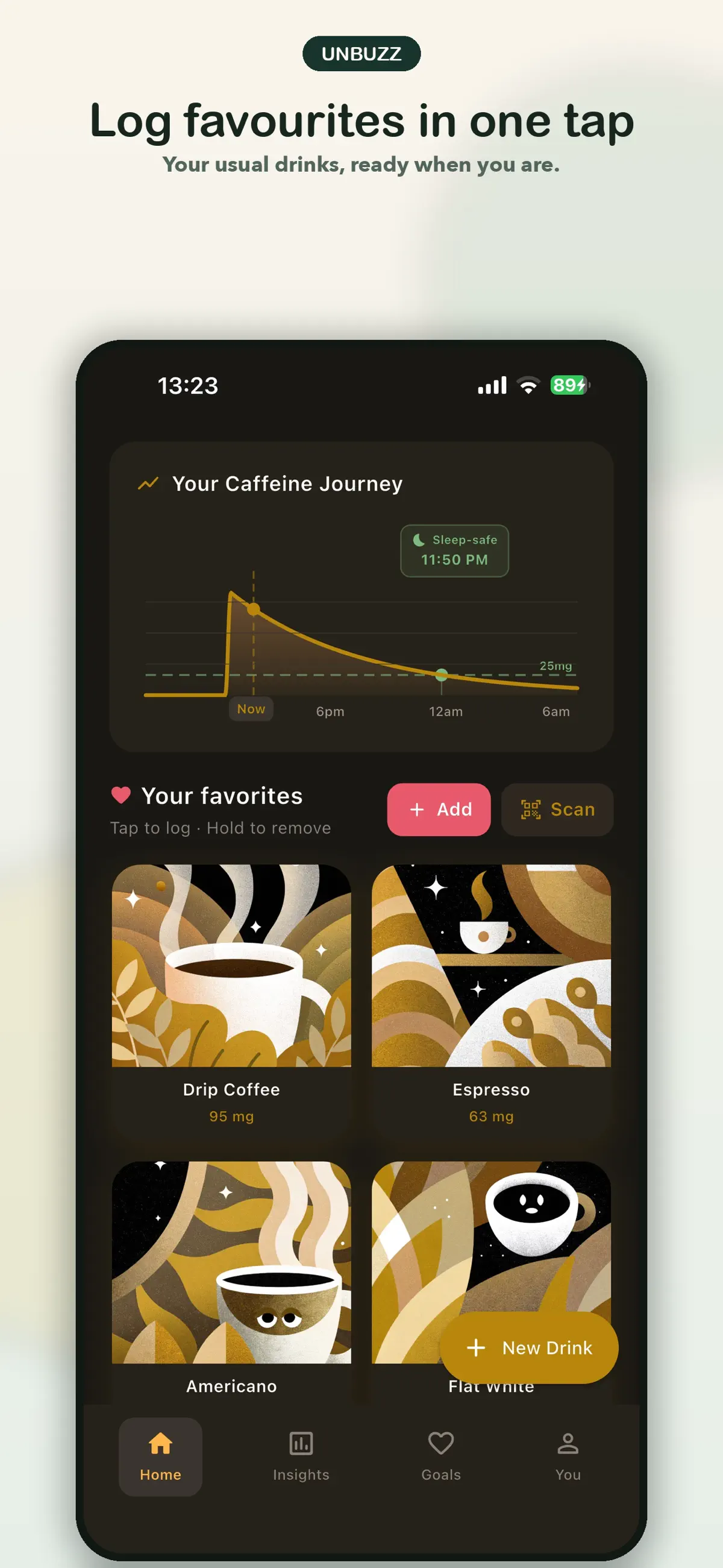
Drink favourites
Saved drinks beside the timeline, with shortcuts to add or scan a drink.
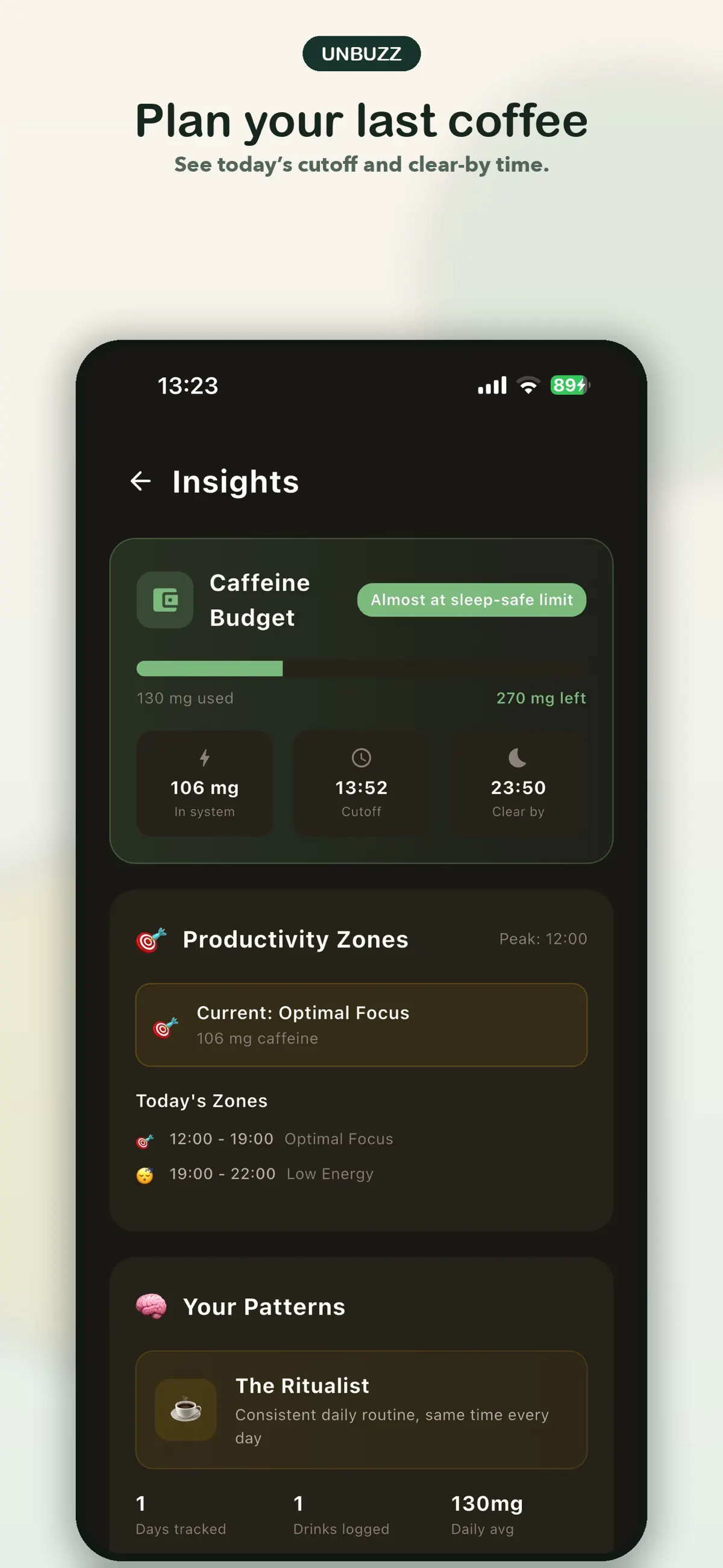
Caffeine budget and timing
The app’s estimated timing windows, logged totals, and habit summaries.
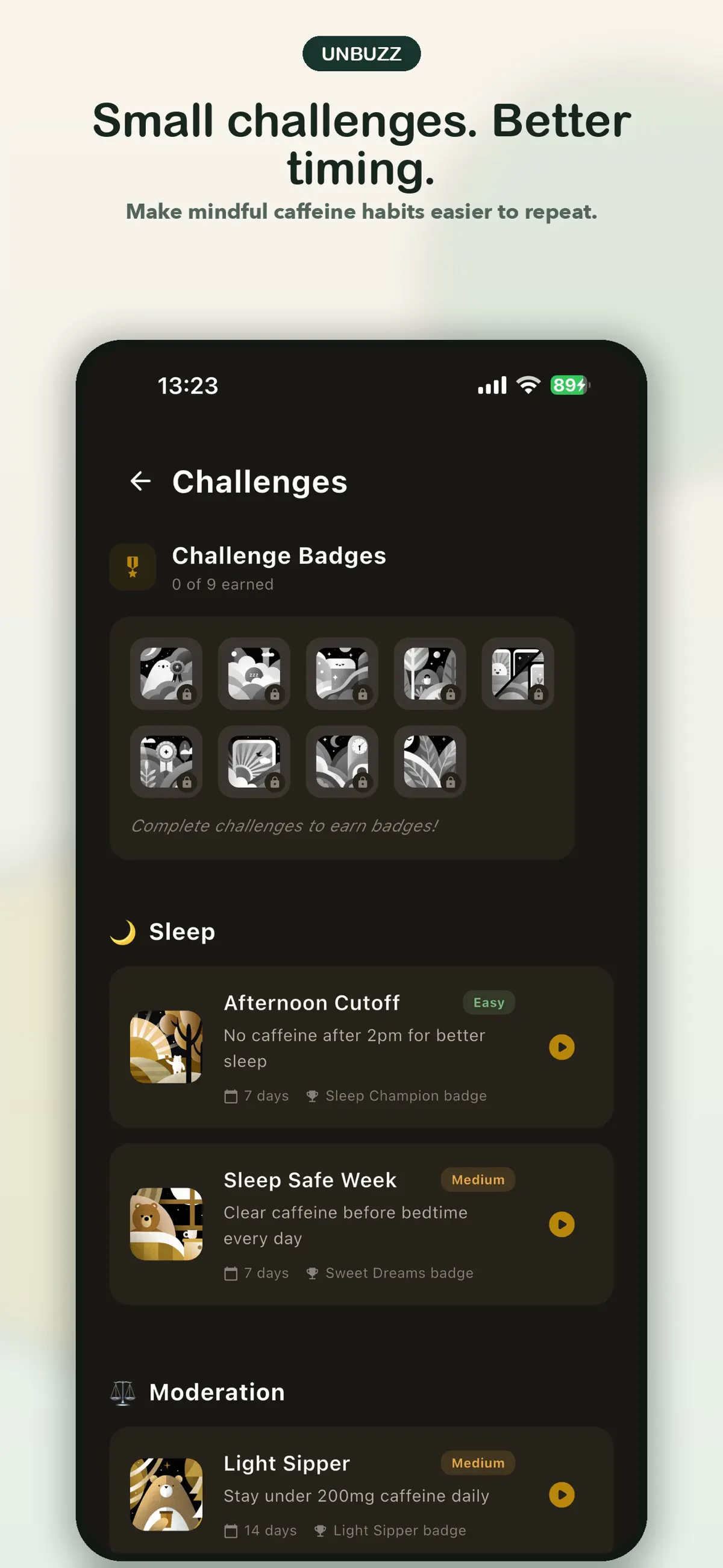
Challenges
Selectable caffeine-tracking challenges with progress indicators.
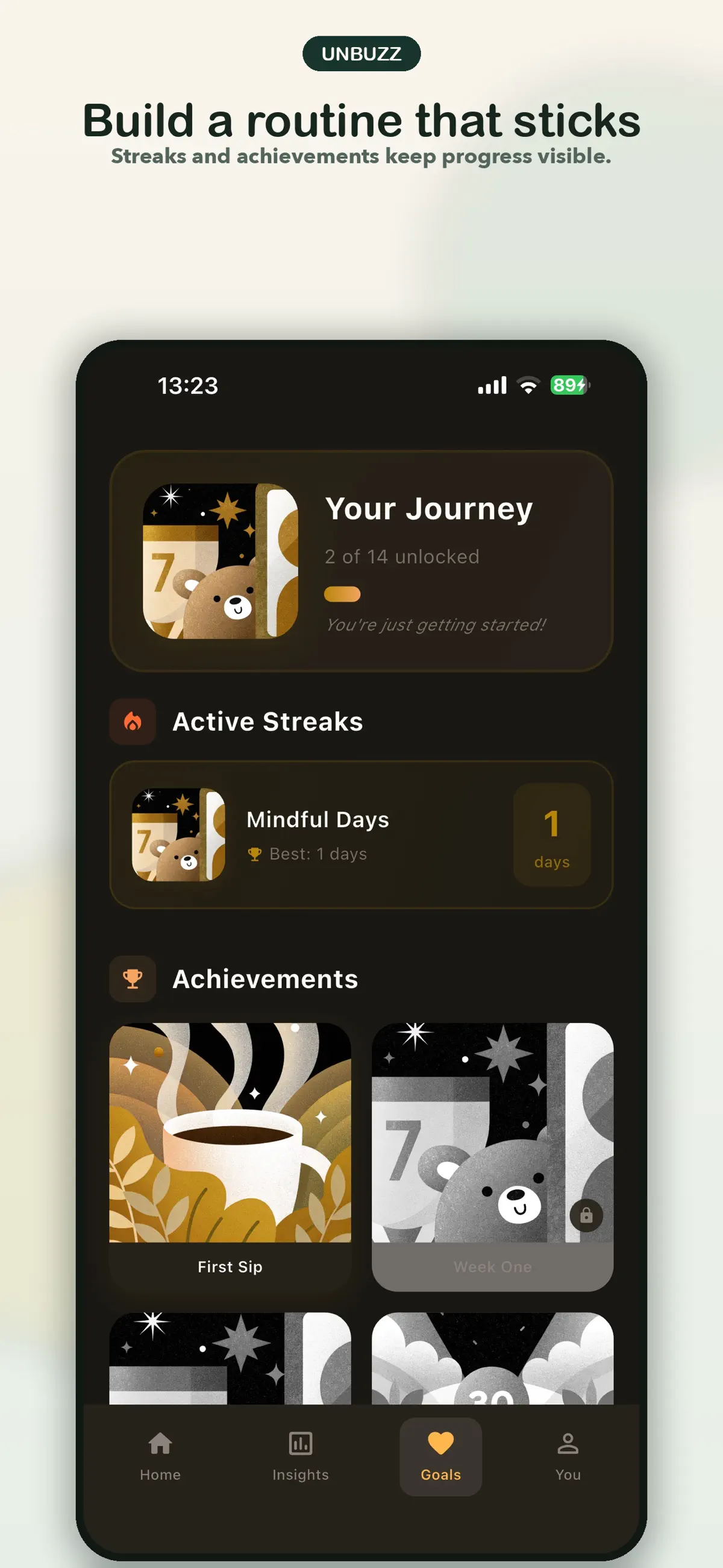
Streaks and achievements
A record of logging streaks and unlocked milestones.
The problem
A daily caffeine total leaves out when each drink was consumed. I built Unbuzz to put timing on the screen: log a drink, see how the estimated amount changes through the day, and adjust the model's assumptions. The design had to make that estimate useful without presenting it as a biological measurement.
Try Unbuzz
Explore drink logging, the caffeine curve, and its adjustable settings in the published app.
What I built
The decisions that make a quick daily log work across the app and its companion screens.
Estimates users can adjust
I built the calculation behind the caffeine curve and the controls for adjusting its assumptions. Logging a drink updates the estimate. The interface explains that this is a model, not a measurement of the body or a guarantee about sleep.
Tracking without an account
I made the core tracker work offline, with drinks and settings stored on the device. Users can start logging without signing up, and the calculations do not depend on a server connection.
Phone, Watch, and widgets
I built the iOS and Android app in Flutter, plus an Apple Watch companion for logging drinks and iOS widgets for checking the estimate. These use the same calculation engine as the phone dashboard.
Technology Stack
Production stack behind the current iOS and Android releases.
- Flutter
- Dart
- iOS
- Android
- watchOS
- Drift (SQLite)
- Riverpod
- RevenueCat
- Supabase
- WidgetKit
- GitHub Actions
Have a product idea of your own?
Tell me the daily task your app should make easier. I'll help scope a useful first version and the integrations it actually needs.
Discuss your ideaPlanning a project of your own? See the website scope from $500 or explore an app sprint.