Client work · Dr Tim Ltd, London

ProFinity: courses sold in a shop and in funnels, unlocked in one app

ProFinity is a learning and community app for aesthetics clinicians. From January to November 2026, in a small product team, I built the parts that run its business: the course platform; course access from purchases in its shop, its funnels, and the app; existing customers moved in with what they had bought; AI search inside each course; and the move to a new backend.

Live on iPhone, Android, and the web: App Store · Google Play

The engagement at a glance

Client
Dr Tim Ltd, London. Client work, January to November 2026
My role
Senior engineer in a small product team: course platform, purchase integrations, and migrations
Sales connected
A WooCommerce shop, GoHighLevel funnels, and card payments with Stripe all unlock courses in the app
Customers moved in
From GoHighLevel and LearnDash, each with the courses they had bought
New server and database
From Firebase to Supabase, and every member kept their password. The switch in the app took one week to build
Store release
I took the app through its first Google Play submissions and review. It has been listed since February 2026

Inside ProFinity

These screenshots are ProFinity’s own, from its App Store listing. The brand, design, and product direction belong to the ProFinity team. Swipe or scroll to explore. The app is live on the App Store and Google Play.

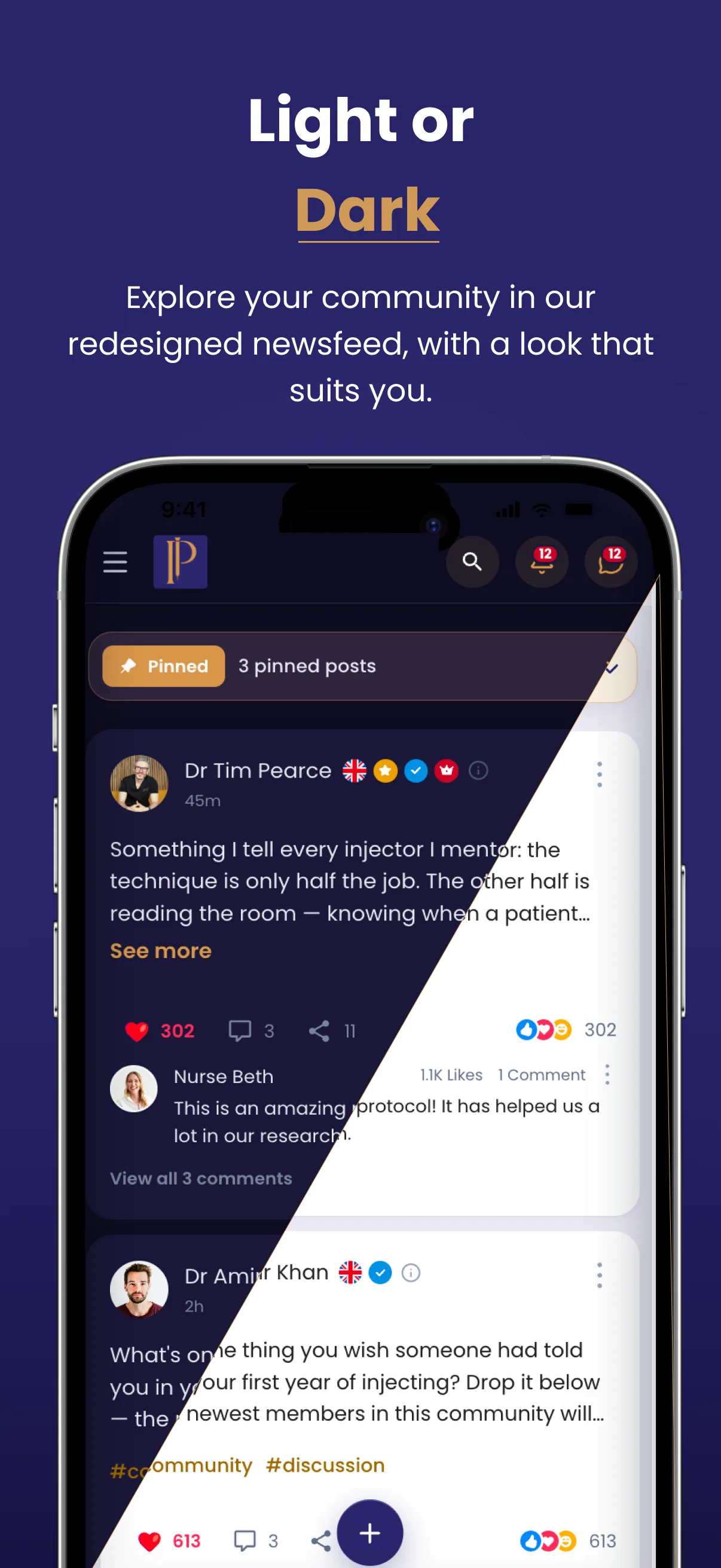
ProFinity App Store screenshot headed Light or Dark: the community newsfeed split between light and dark mode.

Light or dark

The community newsfeed, shown in light and dark mode.

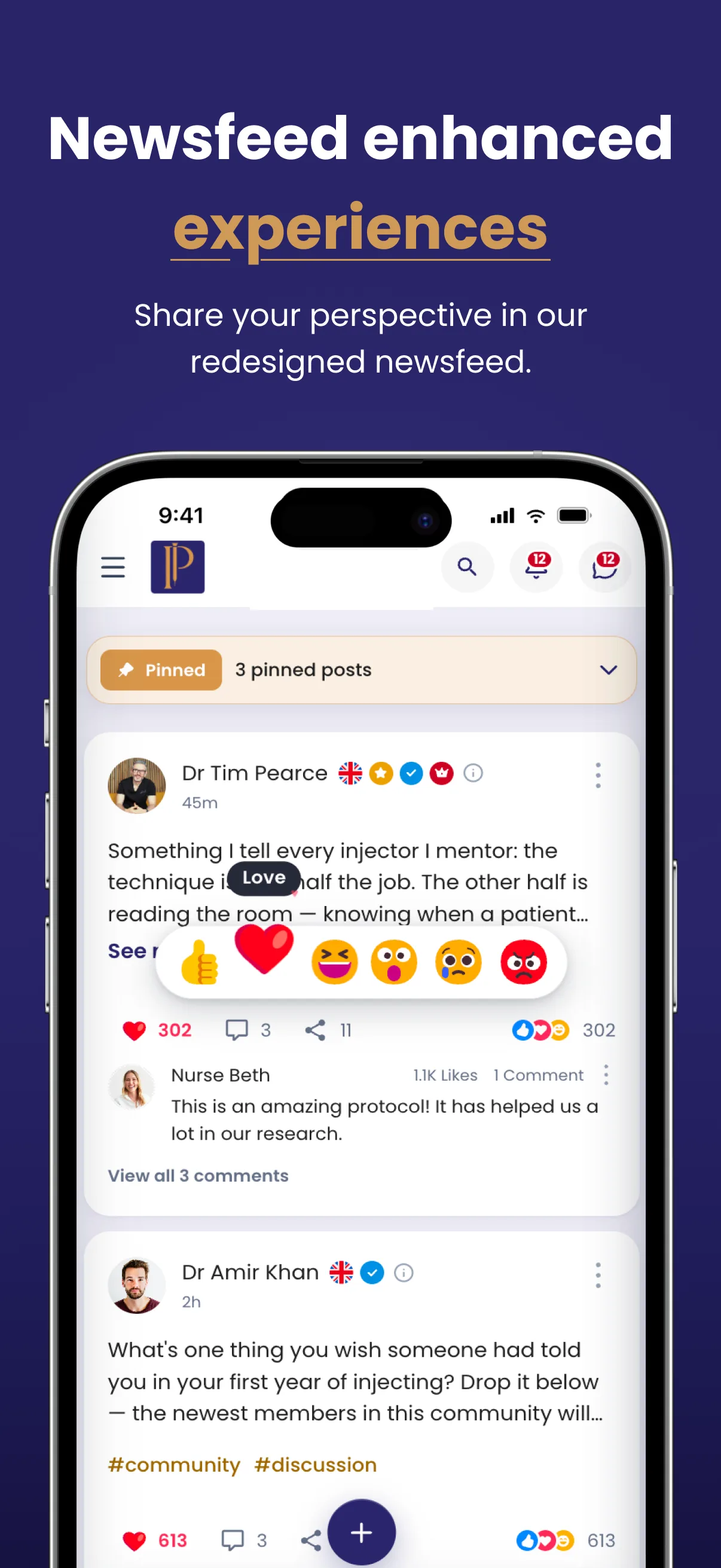
ProFinity App Store screenshot headed Newsfeed enhanced experiences: a post with the reaction picker open.

Newsfeed

Posts from members with comments and quick reactions.

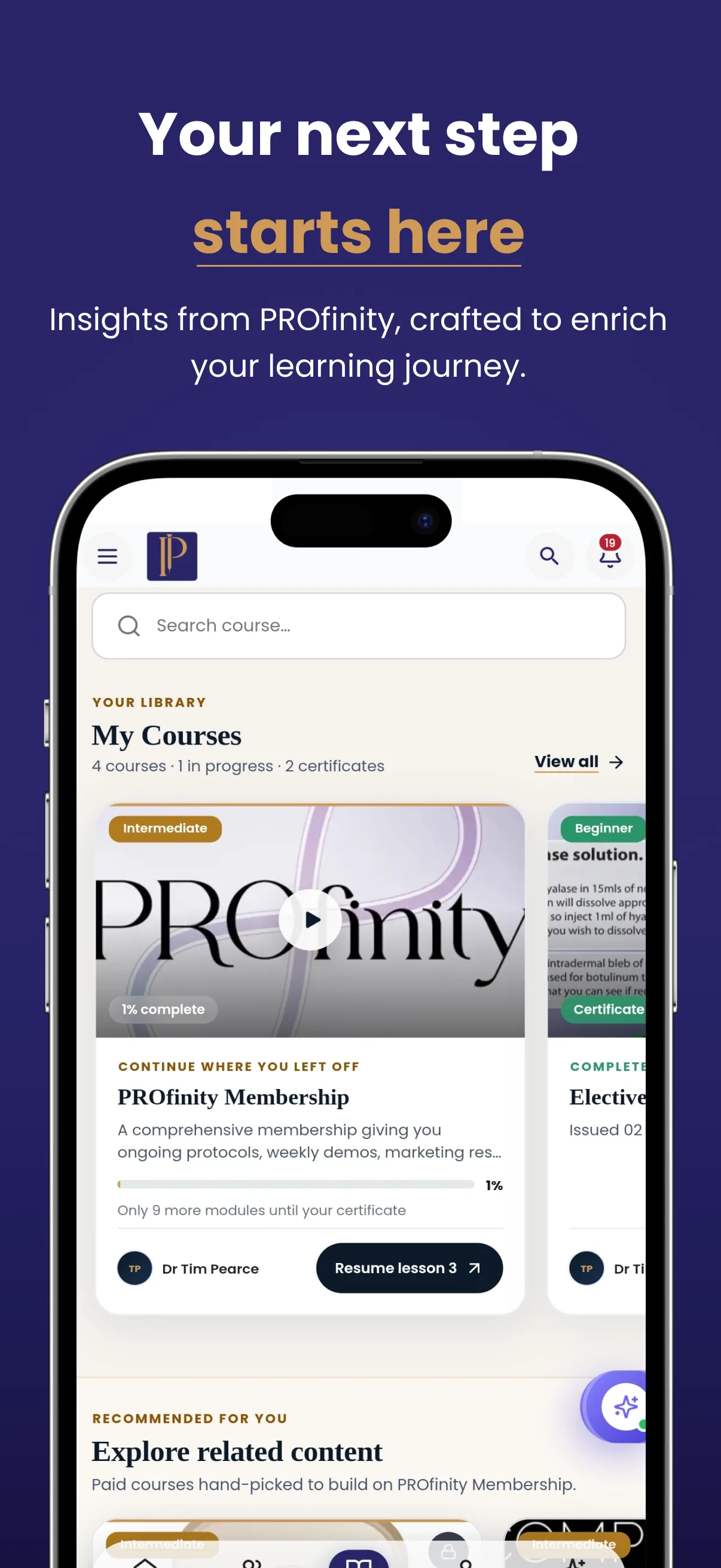
ProFinity App Store screenshot headed Your next step starts here: My Learning with a course to resume and related courses.

My Learning

A member's courses, where to resume, and related courses. I built My Learning end to end.

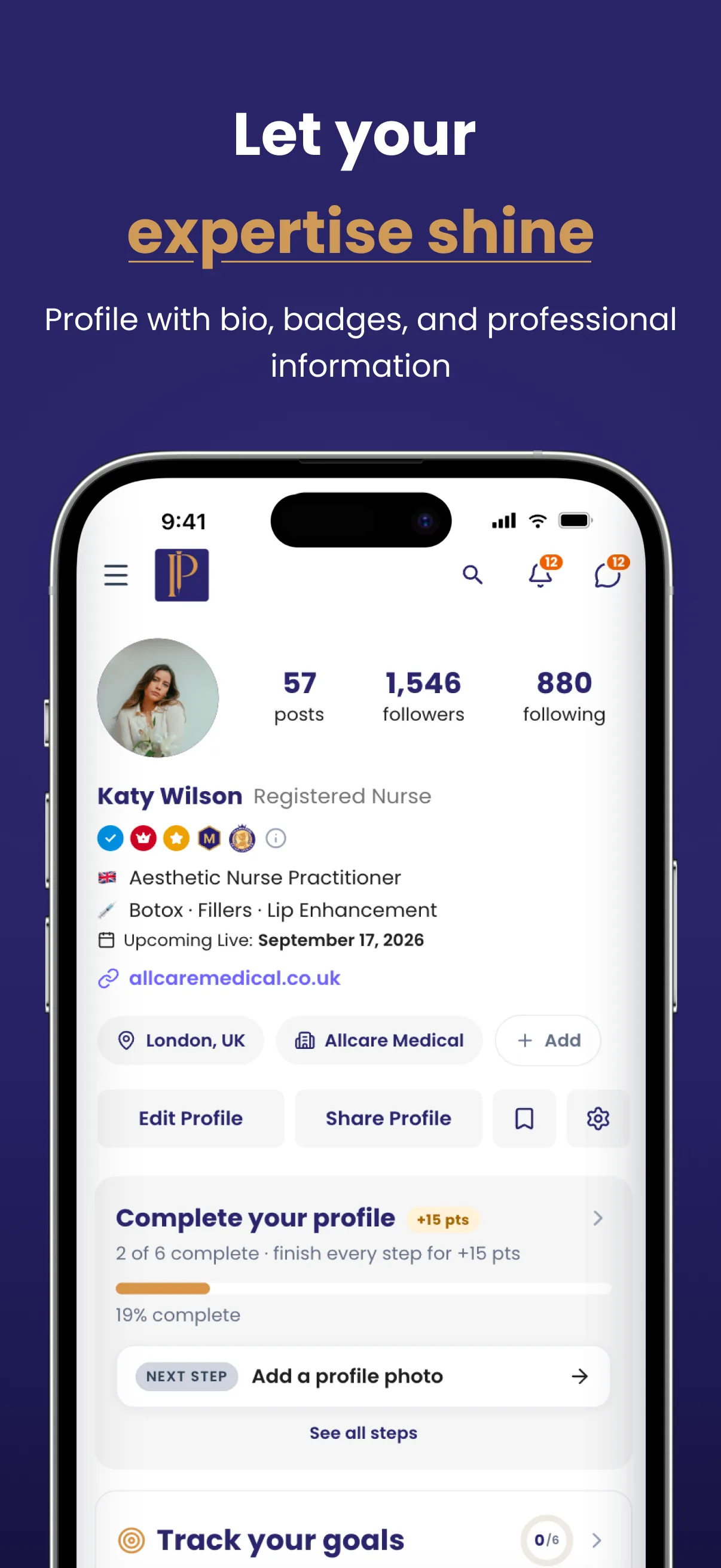
ProFinity App Store screenshot headed Let your expertise shine: a member profile with badges, professional details and a profile checklist.

Profile

A member profile with bio, badges, and a checklist to complete it.

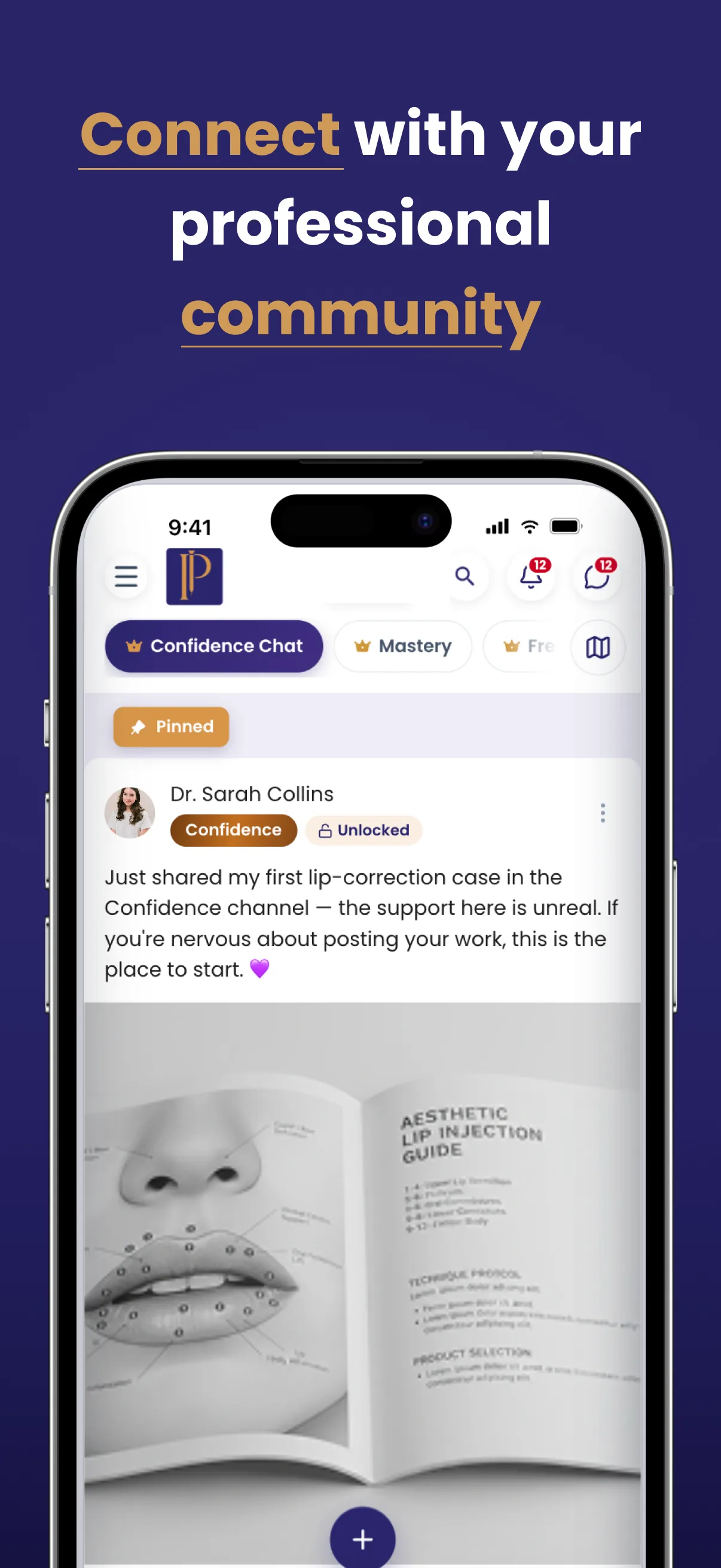
ProFinity App Store screenshot headed Connect with your professional community: a post with an image in a membership channel.

Community channels

Membership channels where members share cases and questions.

How it fits together.

ProFinity brings Dr Tim Pearce’s aesthetic training, a clinician community, live events, and memberships into one app. Every place people buy feeds one backend, and every place they learn reads from it. I built the links from purchases to course access, and from course content to search.

Where people buy

  • WooCommerce shop
  • GoHighLevel funnels
  • Card payments with Stripe
  • Customers from GoHighLevel and LearnDash

One backend

  • One member database
  • Purchases turned into course access
  • Access withdrawn after a full refund
  • Course content and video transcripts

Where they learn

  • The app on iPhone, Android, and the web
  • The course builder for the team
  • In-course AI search and the AI coach
  • Analytics, with consent

Seven things I built, and what made them hard.

For each: what it does for the business, and the engineering problem behind it.

Bought in the shop or a funnel, unlocked in the app

What it does

I connected the shop and the funnels to the app. A purchase in the WooCommerce shop or a GoHighLevel funnel unlocks the right course or membership, card payments in the app run through Stripe, and a course bought in the app is withdrawn again after a full refund. Buyers claim with a link and a six-digit code sent by email, no password needed. The team maps products to courses itself, with a history of every change.

What made it hard

Orders come from a shop, from funnels, and from the app itself, can arrive twice, and can be refunded later. Each one has to end up as exactly the right access for exactly the right person, and only the buyer can claim it.

From order to lesson

  1. Order in the shop or a funnel
  2. The app’s server turns it into course access
  3. The buyer signs in, or claims with an email code
  4. The course opens in the app

How I do it, step by step: Unlock courses from paid WooCommerce orders · Keep GoHighLevel funnels, deliver courses in your app · What Apple and Google allow

Existing customers moved in, with what they bought

What it does

I brought ProFinity’s existing customers into the app, first from GoHighLevel and then from LearnDash, each with the courses they had bought. The existing course library came across from GoHighLevel too. A customer signs in or claims with an email code and finds their courses there, so nobody is asked to buy a course twice.

What made it hard

Every migrated customer has to land with exactly the access they paid for, even when they bought with one email address and sign in with another. An import has to be safe to run again, so nobody is lost or doubled, and only the real buyer can claim a purchase.

How I do it, step by step: Move GoHighLevel customers into your app · Move LearnDash courses and customers into an app

A new backend, every password intact

What it does

I moved members, posts, profiles, comments, and files from Firebase to Supabase, and every member kept their password. The switch itself took one week to build in March 2026: every read and write in the app, and the scripts that carried the data across. It went live in April, and everything I built afterwards runs on it: purchases, course access, search, and analytics in one standard database.

What made it hard

Every account had to arrive with its password still working, and every step had to be safe to repeat, so nothing could be lost or doubled halfway. Then the whole app had to switch over to the new system.

How I do it, step by step: Firebase to Supabase without password resets

A course builder the team runs itself

What it does

I built the course builder the team uses to make any course without a developer: videos, PDF guides, quizzes, sub-modules, and interactive HTML lessons, with a draft preview in the learner’s own view and course duplication. Every course in the library is edited in it.

What made it hard

A course has to look and work the same on iPhone, Android, and the web, whatever mix of lessons it holds. Paid lessons, PDFs, and videos have to open only for people who bought them.

Ask the course, land on the moment

What it does

I built search inside each course. A learner asks a question and gets one to three lessons, with videos opening at the second where the answer starts. Answers come only from that course’s lessons, PDFs, and video transcripts, and only for courses the member can open. The AI coach draws on the same catalog: it recommends only what the member’s plan includes, checks its links every hour, and sends one personal nudge a week to members who use it.

What made it hard

Answers have to come from the course itself, never from a course the member hasn’t bought, and land on the exact moment in a long video. Hours of video have to become searchable text, and a weekly nudge must never arrive twice.

From question to the right second

  1. A question inside a course
  2. Search in that course’s lessons, PDFs, and transcripts
  3. One to three matching lessons
  4. The video opens where the answer starts

Onto Google Play

What it does

I took the app through its first Google Play submissions and review, and it has been listed since February 2026. Admins can require an update when a version is too old, shared lesson links open straight in the app, and phone browsers are sent to the right store.

What made it hard

Google Play checks a new app against its policies on data safety, payments, sign-in, and account deletion before it can be listed, and every point its review raises has to be answered in the app and the listing before the next submission.

How I do it, step by step: What to fix when Google Play rejects a health app

Measuring with consent

What it does

I set up analytics that runs only after consent and only in production, and built much of the team’s analytics app: member journeys, activation, retention, and where people get stuck. With it, I made the team’s development data-driven: each change was measured, so the team kept what worked and changed what didn’t. Every step of sign-up and of purchase claims is measured, a broken claim link raises an alert, and lesson analytics count what was watched, not skipped.

What made it hard

Nothing may be tracked before consent, and one person has to stay one person whichever way they sign in. Standard tools see a Flutter app as one flat picture, so seeing which button was tapped had to be worked out inside the app.

Selling courses or memberships through a shop, a funnel, or an older platform? Tell me what you sell and where, and I’ll tell you how I would connect it to an app.

Discuss your project

Something new every month.

The headline of what I built each month, from January to October 2026.

January
The app’s first Google Play submissions, through review. Listed since February.
March
The switch from Firebase to Supabase, built in one week.
April
The course builder, the course library imported from GoHighLevel, paid courses, and shop purchases that unlock courses.
May
GoHighLevel funnel purchases unlock courses too, for new and existing buyers.
June
Analytics that runs only with consent, and resumable video uploads of up to 5 GB for community posts.
July
LearnDash customers moved in with their course access, interactive HTML lessons, and lesson links that open in the app.
August
The AI coach learns each member’s plan and the course catalog, and purchase claims use a six-digit email code.
September
In-course AI search, and private discussions inside each course.
October
The new My Learning design on web and mobile, with Ask Ava, a quick chat with the AI coach on every learning page.

Questions course and clinic owners ask.

Can my clients keep buying in my shop or funnels?

Yes. At ProFinity, a purchase in the WooCommerce shop or a GoHighLevel funnel unlocks the right course in the app by itself, and courses can also be bought in the app by card.

Can my existing customers move over without losing what they bought?

Yes. ProFinity’s customers came across from GoHighLevel and LearnDash with the courses they had bought, and when the app moved to a new backend, every member kept their password.

Can my team add courses without a developer?

Yes. ProFinity’s team builds every course in the course builder: videos, PDF guides, quizzes, and interactive lessons, previewed in the learner’s own view before they go live.

Will the app get through Apple’s and Google’s review?

Releases are prepared to both stores’ rules on privacy, payments, sign-in, and account deletion. For ProFinity, I took the app through its first Google Play submissions and review.

Can I see where members get stuck?

Yes, with their consent. ProFinity’s analytics show member journeys, activation, retention, and the steps where people stop, and nothing is tracked before consent.

For your technical team.

The stack

Flutter and Dart for iOS, Android, and the web; Supabase with PostgreSQL, row-level security, and Edge Functions; resumable uploads over the TUS protocol and Vimeo for video; Firebase Cloud Messaging for push; WooCommerce, GoHighLevel, and Stripe for commerce; customer migrations from GoHighLevel and LearnDash; PostHog for analytics; GitHub Actions for builds and deploys.

Building a course, membership, or clinic app?

Tell me what you sell, where people buy it today, and what your members should see. I’ll scope a first version with you and send you a fixed quote.

Want to see more? See apps for aesthetic clinics, read how I built Health3, my lab-results app, or explore an app sprint.